 BookBee AI
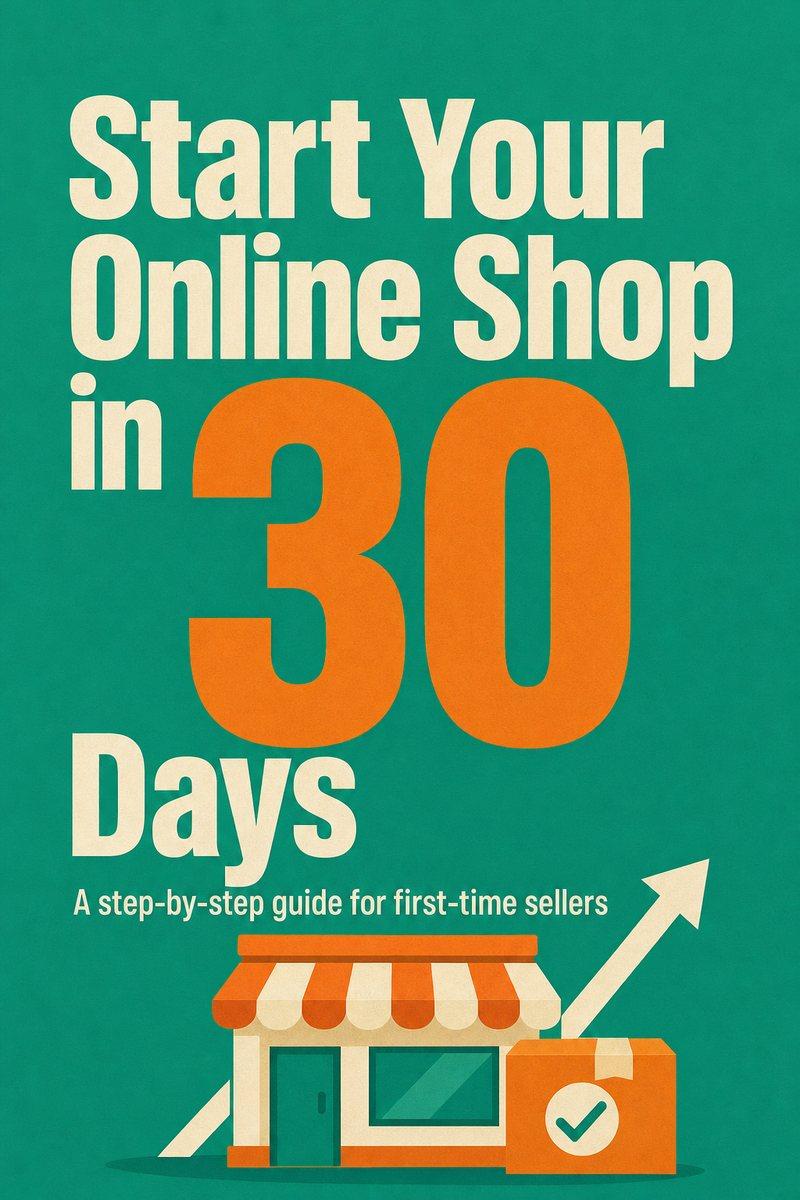
Start Your Online Shop in 30 Days
A step-by-step plan for your first product, first sale and first ten customers
A practical business ebook for first-time sellers: choose a product people already want, check the numbers, build a simple shop and make your first sales in thirty days.
- 7 chapters planned
- Only chapter 1 written
- Chapter 1: about 4 min read
- English
The whole of chapter 1, free. Turn the pages with the arrows, your keyboard or a swipe, or download it as a 6 × 9 in sample PDF with the cover, contents and chapter 1. Free-plan PDFs also carry a small BookBee mark.
Chapter
1
Find a Product People Already Want
A first online shop can stall before it opens, often for the same reason. The owner spends months on the logo, the colours, the perfect name and the perfect website, and only then asks whether anyone wants to buy what they are selling.
This book does it the other way round. Before you build anything, you will find a product that people are already searching for, already buying and already complaining about. That last part matters more than you might think. Complaints are the most useful market research there is, and they are free.
By the end of this chapter you will have a shortlist of three product ideas and a simple way to choose between them. It should take you about three days.
Start with demand, not passion
You will often hear that you should sell what you love. It is half true. Loving your product helps you keep going on slow weeks, and customers can tell when an owner cares. But love does not tell you whether there are buyers, and a shop with no buyers is a hobby with a monthly bill.
The better order is this: find out what people already want, then pick the idea on that list that you would enjoy talking about for the next two years. You get the demand and the enthusiasm, in that order.
Three places to find real demand
You do not need expensive tools for this. You need an afternoon, a notebook and a little patience.
- Marketplace best-seller lists. Large online marketplaces publish lists of their best-selling products in every category, updated often. Look for categories where lots of similar products sell well. That is proof of demand, not a sign the space is too crowded.
- Reviews of popular products, especially the three-star ones. Five-star reviews tell you what people like. One-star reviews can be about delivery. Three-star reviews tell you what buyers wanted and did not quite get, and every one of those is a product idea.
- Questions people ask in forums and groups. When the same question appears again and again, such as “where can I find a lunch box that actually keeps soup hot?”, someone is waiting to be sold an answer.
What makes a good first product
Not every idea is a good first idea. Your first product has one job: to teach you how to sell online without risking money you cannot afford to lose. That means some products are much better starting points than others.
A good first product usually has most of these five features:
- It is small and light, so shipping is cheap and simple.
- It does not break easily, so returns stay low.
- It sells for enough to leave a profit after costs, for example £15 to £60 (an example, not a benchmark).
- It solves a clear problem, so you can explain it in one sentence.
- It is not seasonal, so you can keep learning all year.
Notice what is not on the list: being original. Your first product does not need to be a new invention. It needs to be a better or better-explained version of something people already buy.
A made-up example
Priya teaches yoga three evenings a week and wanted a small online shop to earn extra income. Her first idea was handmade yoga mats, until she checked the costs: heavy, expensive to post and slow to make.
So she went back to her demand diary. Three of her students had complained that their mats slid around in the boot of the car and that the straps they had bought kept snapping. In the reviews of the best-selling mat straps, the same complaint came up again and again in the three-star reviews: the buckles broke within a month.
Her first product became a simple strap with a metal buckle, sourced from a small supplier and sold with a short video showing three ways to carry a mat. It weighed almost nothing, cost little to post and solved a problem people were already writing about. It was not glamorous. In this example, it sold.
Score your shortlist
Pick your three best ideas from the diary and give each one a score from one to five on these questions. Be honest. It is your money.
- Can I see clear proof that people already buy this?
- Can I explain the problem it solves in one sentence?
- Is it small, light and hard to break?
- Can I sell it for at least three times what it costs me?
- Would I still enjoy talking about it a year from now?
Add up the scores. The highest total wins, unless your gut strongly disagrees, in which case look again at question five. Enthusiasm is not the first thing that matters, but it is not nothing.
In the next chapter you will take that winning idea and check the numbers: what it will really cost you, what you can charge, and how many you need to sell each month before the shop pays for itself. It is the least exciting chapter in this book, and the one that will save you the most money.
Page 1 of 4
The plan
- 1.Find a Product People Already WantFree to read
- 2.Do the Numbers Before You SpendPlanned
- 3.Set Up Your Shop in a WeekendPlanned
- 4.Photos and Product Pages That SellPlanned
- 5.Payments, Shipping and the Boring BitsPlanned
- 6.Your First Ten CustomersPlanned
- 7.The 30-Day Launch PlanPlanned
About this book
Start Your Online Shop in 30 Days is a how-to guide for people who want to sell something online and keep putting it off. It works on any shop platform and assumes no budget beyond a few small costs. Each chapter would end with a short task, and the last chapter would turn them into a day-by-day plan.
Coaches and small-business advisers could give an ebook like this to new clients, or sell it on Amazon KDP as a starter guide, where KDP asks you to declare AI text. The plan has seven focused chapters in three parts, with checklists, worked examples and plain numbers.
A sample book. It was written as an example, not by the app, to show the kind of book BookBee aims to make. Only chapter 1 exists, and it is shorter than the 2,000+ words the app aims for. The cover was made with AI at higher quality and hand-picked, so yours may look different. The tip boxes, numbered lists and parts here were set by hand. A guide from the app has subheadings and bullet lists.
More sample books
- Small Habits, Big YearSelf-help ebook · 6 chapters
- The Puffin SeasonRomance · 5 chapters
- Tea at the Edge of the WorldShort stories · 6 stories
- The Last Lit WindowMystery · 5 chapters
- Twelve Minutes to ViennaThriller · 6 chapters

- The Glass CitadelFantasy · 6 chapters

- The Long Quiet Between StarsSci-fi · 5 chapters
Have an idea for a book like this?
Describe it in one line. BookBee plans the chapters for you to approve, writes them, follows your style if you paste a sample, and helps you make a cover.