 BookBee AI
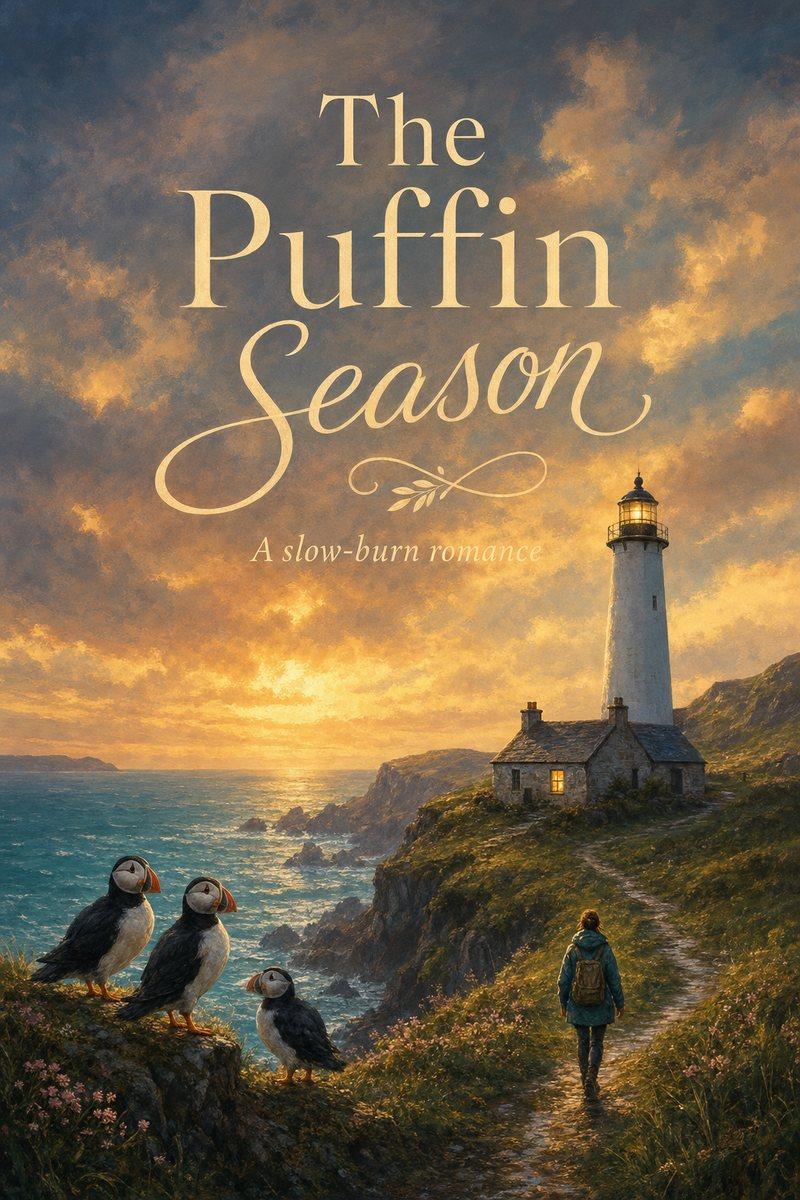
The Puffin Season
A slow-burn romance
A slow-burn romance on a Scottish island: a marine biologist arrives in a storm to count the puffins, and the only shelter is the lighthouse of the man who blames her work for emptying the harbour.
- 5 chapters planned
- Only chapter 1 written
- Chapter 1: about 5 min read
- English
The whole of chapter 1, free. Turn the pages with the arrows, your keyboard or a swipe, or download it as a 6 × 9 in sample PDF with the cover, contents and chapter 1. Free-plan PDFs also carry a small BookBee mark.
Chapter One
The Door in the Gale
The ferryman had warned her twice, and Isla Reid had thanked him twice, which in hindsight was not the same thing as listening.
“The road floods at the causeway,” he had said, nodding at the sky as if it were an old enemy. “Get to the village before the tide turns, or you’ll not get there at all.”
She had smiled, shouldered her rucksack and her waterproof case of instruments, and walked off the slipway into a wind that tasted of salt and iron. That had been an hour ago. Now the road ended in a sheet of grey water, the far side was a smudge, and the rain was coming sideways, which she had always assumed was something people said rather than something weather actually did.
Isla checked her phone. One bar of signal, then none. The map showed the village of Port Ailig two miles beyond the causeway, and the bed and breakfast she had booked for the season sat cheerfully at its heart, with a five-star review that mentioned the scones.
Behind her, on the headland, a light turned.
She watched it sweep across the bay, white and patient, and come round again. Lighthouses were automated now; she knew that. But the low house at its foot had a lamp in one window, and smoke, or what was left of it after the wind had finished, leaking from the chimney.
It took her twenty minutes to climb the track. By the time she reached the door, her jacket had given up any pretence of being waterproof, and her fingers had stopped feeling like fingers. She knocked, waited, and knocked again, harder.
The door opened about a foot. The man behind it was tall enough to have to stoop, with dark hair that needed cutting and the kind of beard that came from not bothering rather than deciding. He looked at her, then at the case, then at the rain, and his expression settled into something that was not quite a welcome.
“You’ll be the scientist,” he said.
“Isla Reid. I’m with the seabird survey. The road’s under water and I can’t—”
“I know where the road is.” He stood back, though only just far enough. “You’d better come in before you drown on my step. It would mean paperwork.”
The kitchen was small and very warm. A range took up most of one wall, and someone had hung oilskins, rope and a pair of binoculars on hooks beside it with the neatness of a person who expected to need them in the dark. There was a chart of the coast pinned above the table, its edges soft with handling.
“Callum MacLeod,” the man said, as if remembering that people usually exchanged names. He took her jacket without asking and hung it by the range, where it began to steam. “Sit. The kettle’s on.”
She sat. Her case she kept at her feet. “Thank you. Really. I’ll get out of your way as soon as the tide drops.”
“Tide won’t drop enough for the causeway till morning.” He set a mug in front of her, strong tea with the milk already in, which she would normally have objected to and now could have wept over. “Not in this.”
“Then I’ll find somewhere—”
“There is nowhere. There’s me, the light and about forty thousand birds.” He leaned against the range with his arms folded. “You’ll take the spare room. It has a bed and a window that mostly shuts.”
It was kindly meant, or at least practically meant, but there was something underneath it, a coolness she could not place. Isla wrapped both hands around the mug and decided to be grateful anyway.
“You said I’d be the scientist,” she said. “Were you expecting me?”
“The whole island was expecting you. It’s not a big island.” He looked at the case again. “Last time someone came to count the puffins, they closed the fishing grounds for three years. You’ll forgive people for being curious about the next one.”
So that was it. Isla had read the old report on the ferry: a steep decline in the colony, a recommendation to protect the sand eels the puffins fed on, a ban on fishing within six miles of the cliffs. She had read it as a success. It had not occurred to her, until this moment, to read it as a list of people who had lost their living.
“I’m here to count,” she said carefully. “That’s all. Whatever the numbers say, they say.”
“That’s what the last one said.” Callum pushed off from the range and opened a cupboard, taking out bread, cheese and a jar of something dark. “And the harbour’s been half empty ever since.”
They ate mostly in silence. The wind threw itself at the house in long, hollow gusts, and every so often the whole building seemed to brace. Isla found herself watching the way Callum listened to it, his head tilted slightly, as though the storm were saying something only he could translate.
“Is it always like this?” she asked.
“No.” He almost smiled. “Sometimes it’s worse.”
After supper he showed her the spare room. It was narrow and clean, with a quilt that had been mended in three different colours of thread, and a window that looked straight out at the cliffs. In the last of the light she could see them: the slopes white with spray, and below the grass line, the dark mouths of the burrows.
“They come back in April,” Callum said from the doorway. “Same burrows, same partners, most of them. They’ve been doing it longer than anyone’s been keeping that light.”
There was something in his voice that had not been there in the kitchen. Isla turned. “You know them.”
“I’ve watched them every spring for twelve years.” He shrugged, as though it were nothing, as though it had not just told her more about him than anything else he had said. “Someone has to. The lighthouse doesn’t need me any more.”
“Then you could help,” she said, before she had quite decided to. “With the survey. You’d know the colony better than any report.”
The warmth went out of his face like a lamp being turned down. “I’ll not help you close the harbour for another three years, Dr Reid.”
“That isn’t what I—”
“Goodnight,” he said, and pulled the door gently shut.
Isla lay awake for a long time, listening to the house creak and the sea pound the rocks below. The light swept across her ceiling every twelve seconds, and she found herself counting it the way she would count birds: steady, patient, not hurrying the number.
She thought about the report, and the harbour she had not yet seen, and the man downstairs who knew where the puffins nested and would not tell her.
Somewhere around midnight the wind dropped, all at once, as if someone had closed a door on it. In the sudden quiet she heard footsteps on the stairs, then the front door, then nothing.
She went to the window. Below her, a figure with a torch was walking along the cliff path towards the burrows, slowly, stopping every few yards to shine the beam low across the grass.
Checking on them, she thought. After a storm like that, he goes out to check on them.
She watched until the torch turned back towards the house. Then she got into bed, pulled the mended quilt up to her chin, and fell asleep wondering how many seasons it would take to count a man like that properly.
Page 1 of 5
The plan
- 1.The Door in the GaleFree to read
- 2.A Quiet WatchPlanned
- 3.What the Data ShowsPlanned
- 4.The StormPlanned
- 5.A Home Beyond the HarbourPlanned
About this book
The Puffin Season is planned as a closed-door contemporary romance in five chapters, told in the past tense from two points of view and written in British English. Isla Reid, a marine biologist, comes to a small island to survey its puffin colony. Callum MacLeod keeps the lighthouse and blames the fishing ban that followed the last survey for the island’s empty harbour.
In a real BookBee book, the story bible would keep names, places and the island’s geography consistent across every chapter, and each chapter would follow a planned beat: arrival, a reluctant truce, a discovery in the harbour records, a storm, and a home worth staying for.
A sample book. It was written as an example, not by the app, to show the kind of book BookBee aims to make. Only chapter 1 exists, and it is shorter than the 2,000+ words the app aims for. The cover was made with AI at higher quality and hand-picked, so yours may look different. Full novels in the app run 32 or more chapters, on paid plans.
More sample books
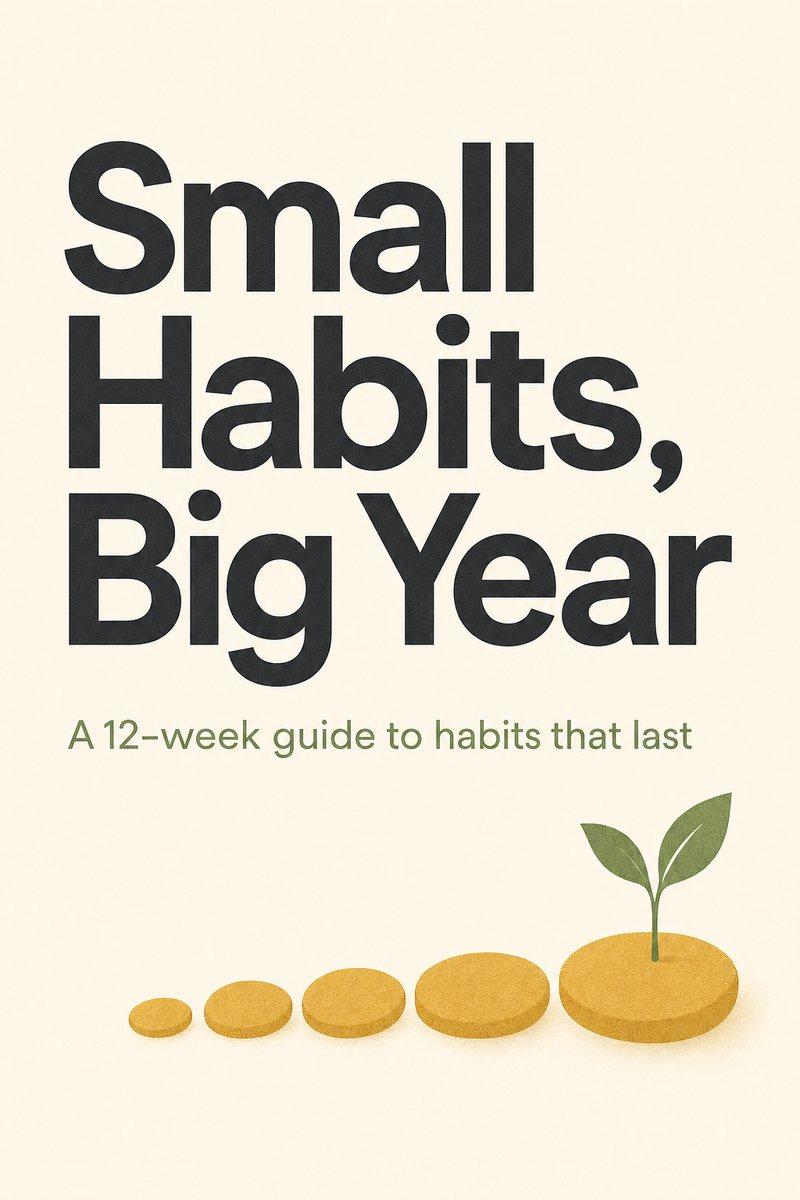
- Small Habits, Big YearSelf-help ebook · 6 chapters
- Tea at the Edge of the WorldShort stories · 6 stories

- The Last Lit WindowMystery · 5 chapters

- Twelve Minutes to ViennaThriller · 6 chapters

- The Glass CitadelFantasy · 6 chapters

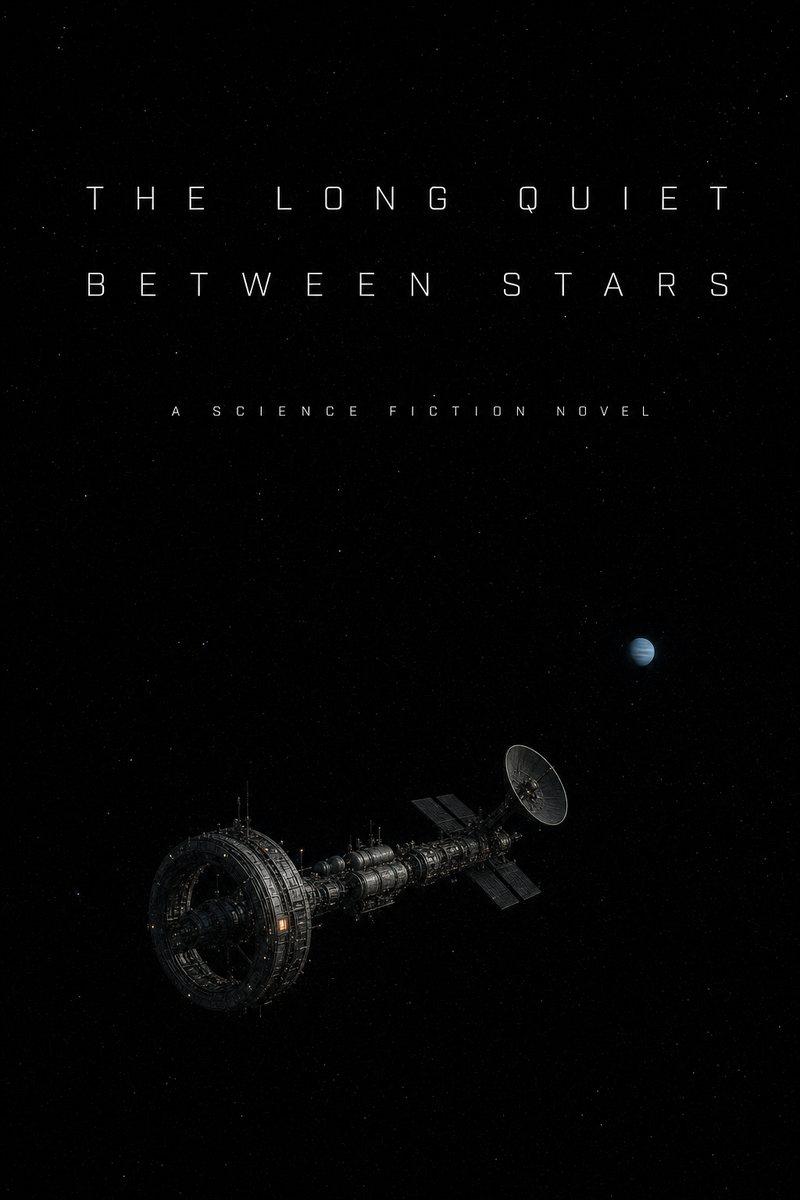
- The Long Quiet Between StarsSci-fi · 5 chapters
- Start Your Online Shop in 30 DaysBusiness ebook · 7 chapters

Have an idea for a book like this?
Describe it in one line. BookBee plans the chapters for you to approve, writes them, follows your style if you paste a sample, and helps you make a cover.